MB-Verde Limón
DP-4461A
Organic and inorganic
Food contact: not recommended
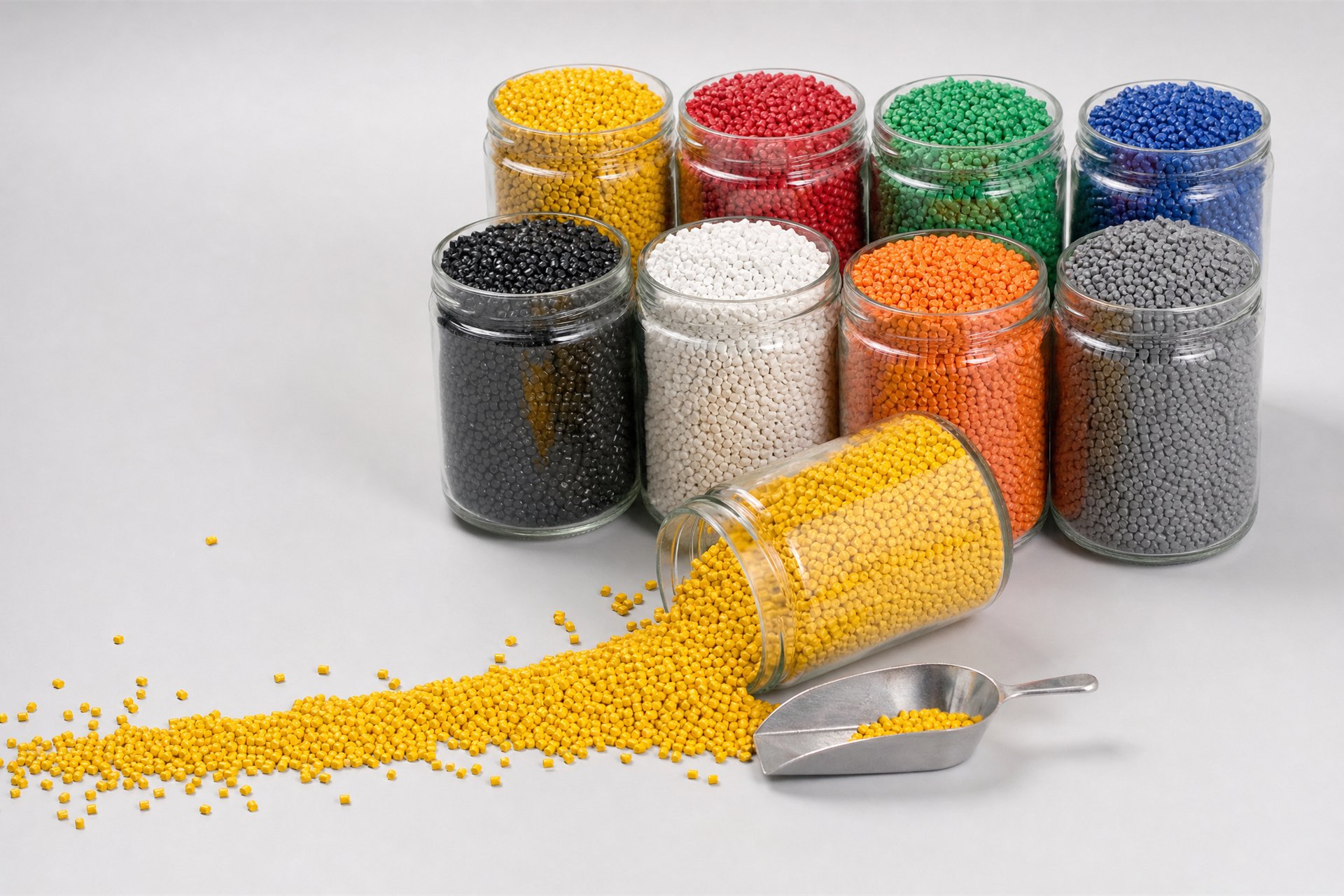
Stock masterbatch
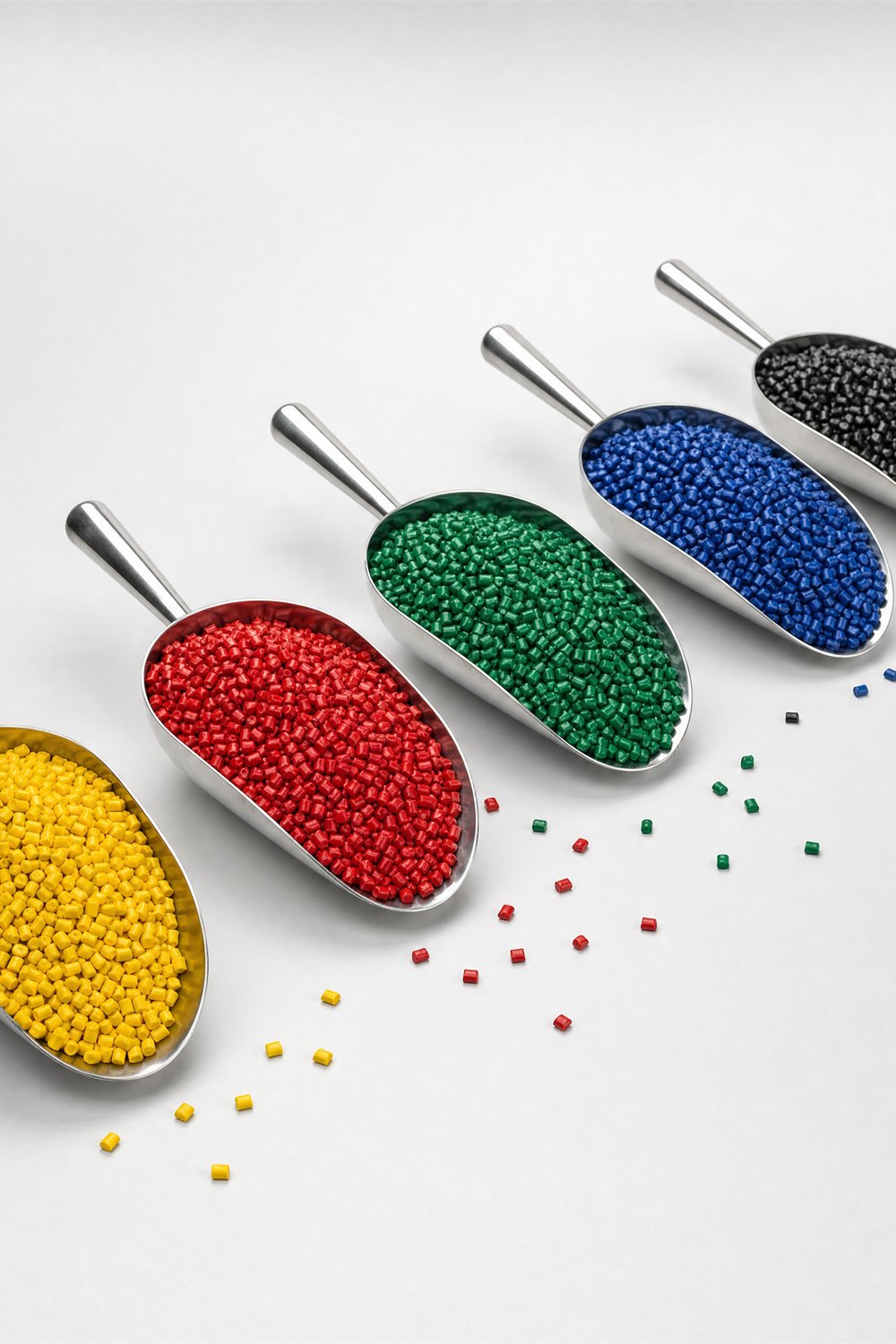
For HDPE, LDPE and PP, with options recommended for food contact under FDA 21 CFR 178.3297. If your shade is not in the catalog, we match it to order.
Common technical sheet
Processing data is the same across the whole line. Dosage is adjusted to your machine with the technical proposal that comes with every quote.
Catalog
Each swatch carries its DP code, pigment type and food contact recommendation. FDA marks the colors recommended for food contact; BIO, those in the biodegradable line.
DP-4461A
Organic and inorganic
Food contact: not recommended
DP-4462A
Organic and inorganic
Food contact: not recommended
DP-4463A
Organic and inorganic
Food contact: not recommended
DP-4456A
Organic and inorganic
Food contact: recommended
DP-3158A
Organic and inorganic
Food contact: recommended
DP-4458A
Organic and inorganic
Food contact: recommended
DP-4460A
Organic and inorganic
Food contact: recommended
DP-2049A
Organic and inorganic
Food contact: recommended
DP-4455A
Organic and inorganic
Food contact: not recommended
DP-4446A
Organic
Food contact: not recommended
DP-4450A
Organic and inorganic
Food contact: not recommended
DP-4449A
Organic and inorganic
Food contact: not recommended
DP-4451A
Organic and inorganic
Food contact: recommended
DP-4559A
Organic
Food contact: not recommended
DP-3174A
Organic and inorganic
Food contact: recommended
DP-4453A
Organic and inorganic
Food contact: not recommended
DP-4452A
Organic
Food contact: not recommended
DP-4454A
Organic and inorganic
Food contact: not recommended
DP-4536A
Organic and inorganic
Food contact: recommended
DP-2149A
Organic and inorganic
Food contact: recommended
LGA-1023A
Organic and inorganic
Food contact: recommended
DP-2540A
Organic and inorganic
Food contact: not recommended
DP-2567A
Organic and inorganic
Food contact: not recommended
DP-3980A
Organic and inorganic
Food contact: not recommended
DP-2563A
Organic and inorganic
Food contact: not recommended
DP-2547A
Organic and inorganic
Food contact: recommended
DP-2548A
Organic
Food contact: not recommended
DP-4545A
Organic
Food contact: recommended
DP-4545A
Organic and inorganic
Food contact: recommended
DP-4547A
Organic
Food contact: recommended
On-screen color is a reference. Final matching is validated against a physical sample in your process.
Custom development
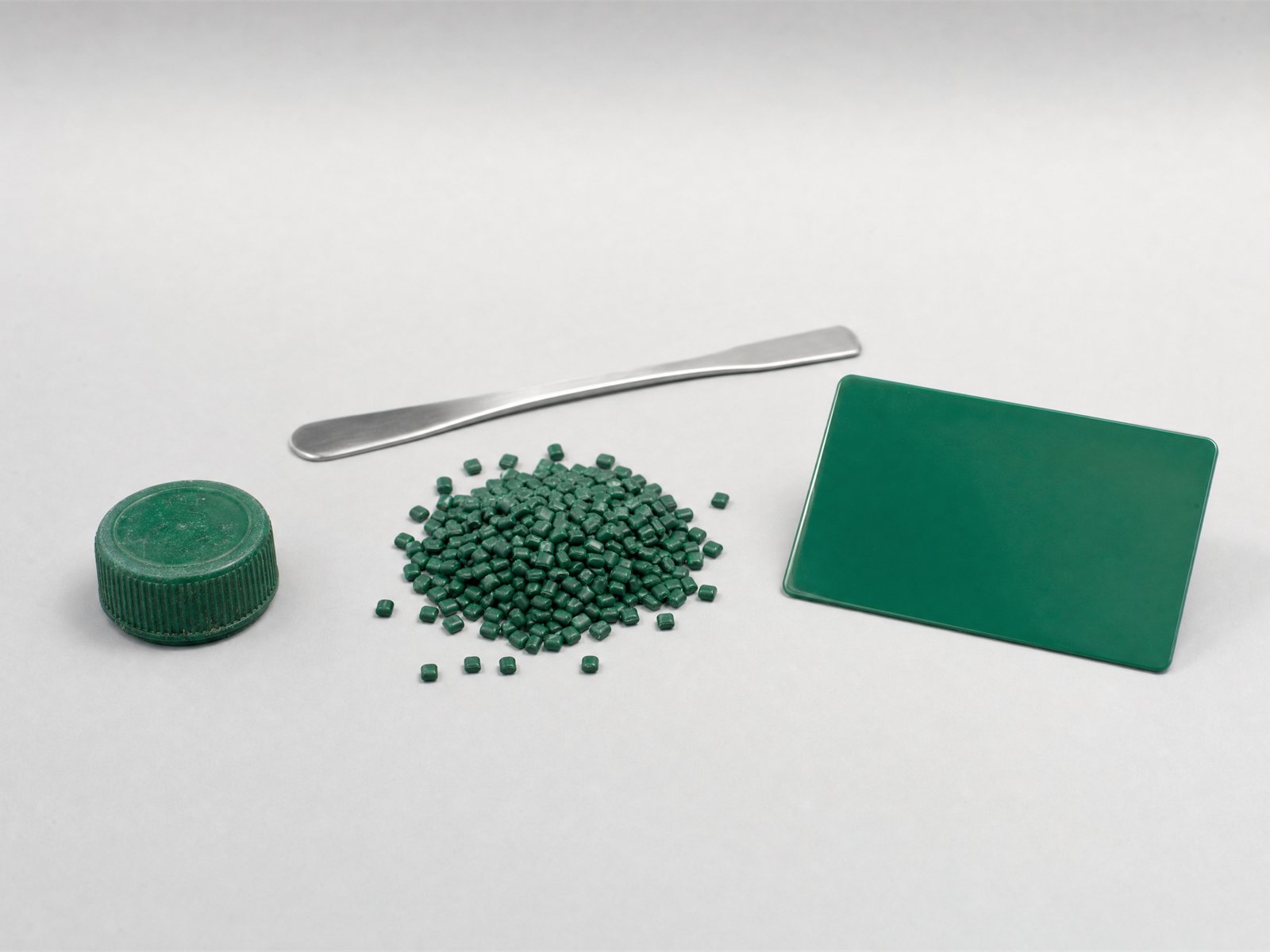
Most of our projects start from a specific customer requirement. The Quality Control, Design and Development lab formulates the match with measuring equipment and the Pantone reference.
Before producing volume, you validate the shade on your own machine. That way quality is confirmed where it matters.
Special lines
Up to 70% pigment concentration, free of heavy metals. Formulations that comply with NOM and FDA CFR regulations.
Oxo-biodegradable additive that accelerates polymer breakdown in stages down to compostable residues.
Pigments encapsulated in polymer resin at high concentrations. Low dosage for solid and translucent colors.
Special color effects for products that need to stand out on the shelf.
Greater tinting strength with lower dosage per kilogram of resin.
Fragrance built into the masterbatch. Reduces unwanted odors when reprocessing recycled materials.
Frequently asked questions
If your question is not here, write it in the quote form and we answer it with technical judgment.
What it is, how much is dosed, which types exist and what the lab needs to match your shade.
It is a concentrate of pigments or additives already dispersed in a carrier resin, in pellet form. It is mixed with virgin resin in the machine and releases the color or the function during processing. It avoids handling powder pigment on the plant floor.
Typical dosage ranges from 1 % to 5 % depending on pigment loading and target shade. In round numbers, one ton of resin is colored with about 25 kg of masterbatch at 2.5 %. The exact percentage is defined during development, never assumed.
Color, white, black, additive and filler. Filler masterbatch carries mineral, usually calcium carbonate or talc, and is used to add stiffness and dimensional stability while lowering virgin resin cost.
The stock line is formulated for HDPE, LDPE and PP, in injection, film extrusion, extrusion blow molding and compression molding, with a processing range of 150 °C to 250 °C. For engineering plastics the development is tailored to the resin.
The color reference, which can be a physical part, a Pantone code or a sample of the current material; the exact polymer; the transformation process; and the end use, especially if there is food contact or outdoor exposure. With that the laboratory formulates and measures against the standard.
Send the shade reference (a physical part, a Pantone code or a DP code from the stock catalog), the exact polymer, the transformation process and the estimated volume. State whether there is food contact or outdoor exposure. The laboratory formulates, measures against the standard and the color is validated in your own process before committing volume. Every request is reviewed within 24 business hours.
Quote
Three pieces of information are enough to start: shade reference, application and estimated volume. Every request is reviewed within 24 business hours.
Phone
Hours
Monday to Friday, 8:00 am to 6:00 pm